Charting Visual Customization Pathways That Unlock Layered Content Gates in App-Based Gambling Ecosystems
Written by Katja Koch · Jul 18, 2026
Charting Visual Customization Pathways That Unlock Layered Content Gates in App-Based Gambling Ecosystems
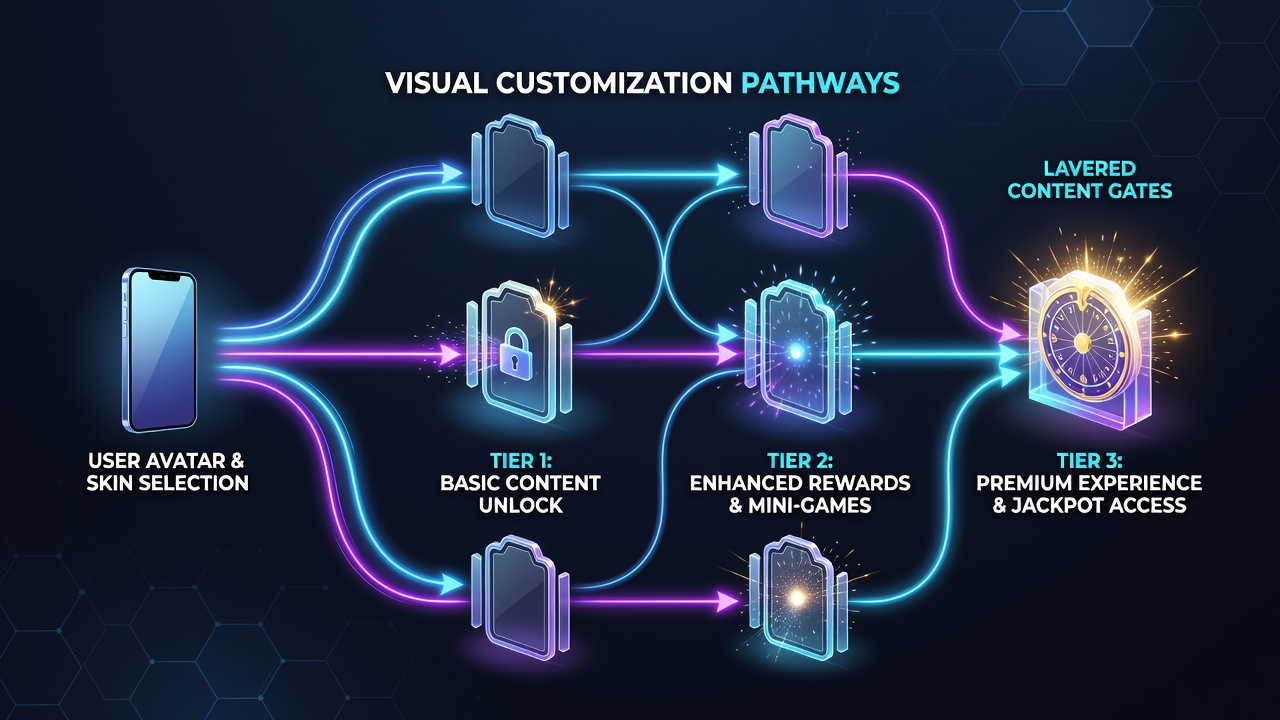
App-based gambling platforms organize user progression through visual customization tools that function as entry points to successive content layers, and developers integrate these pathways so that changes to interface elements, avatars, and themes trigger access to restricted game modes or bonus structures. Data from mobile gaming reports indicate that personalization sequences often begin with basic color palettes or icon swaps before advancing toward more complex alterations like animated backgrounds or exclusive sound packs, each modification serving as a checkpoint that reveals additional features once completed.
How Customization Pathways Operate in Mobile Ecosystems
Users encounter initial customization screens immediately after account setup, where selections such as avatar clothing or table felt designs accumulate points that feed into a central progression meter, and this meter determines when new gates open. Research from industry analytics firms shows that these systems track every visual adjustment in real time, mapping user choices against predefined thresholds that correspond to different loyalty tiers or content depths. Observers note that platforms frequently update these thresholds during seasonal events, including updates rolled out around July 2026, to align visual milestones with promotional calendars.
Layered content gates typically separate standard slot libraries from premium live dealer rooms or tournament brackets, and visual pathways provide the navigation structure rather than direct monetary deposits alone. When a player completes a series of theme customizations, the app automatically grants entry to previously hidden sections, a process that data indicates reduces friction compared with traditional menu navigation. Those who have examined multiple operator interfaces report that the sequence often incorporates branching options, allowing parallel pathways through different visual categories to reach the same gate.
Technical Mapping of Visual Triggers and Content Access
Backend architectures log customization actions as discrete events that connect to content management databases, and these connections determine whether a gate remains closed or opens based on accumulated criteria. According to technical documentation released by platform providers, each visual element carries metadata tags that interact with user profile variables to calculate eligibility, creating a dynamic system that adjusts in response to ongoing activity. Figures from mobile engagement studies reveal that operators who implement branching visual pathways see higher retention rates because players explore multiple routes to unlock the same content layer.
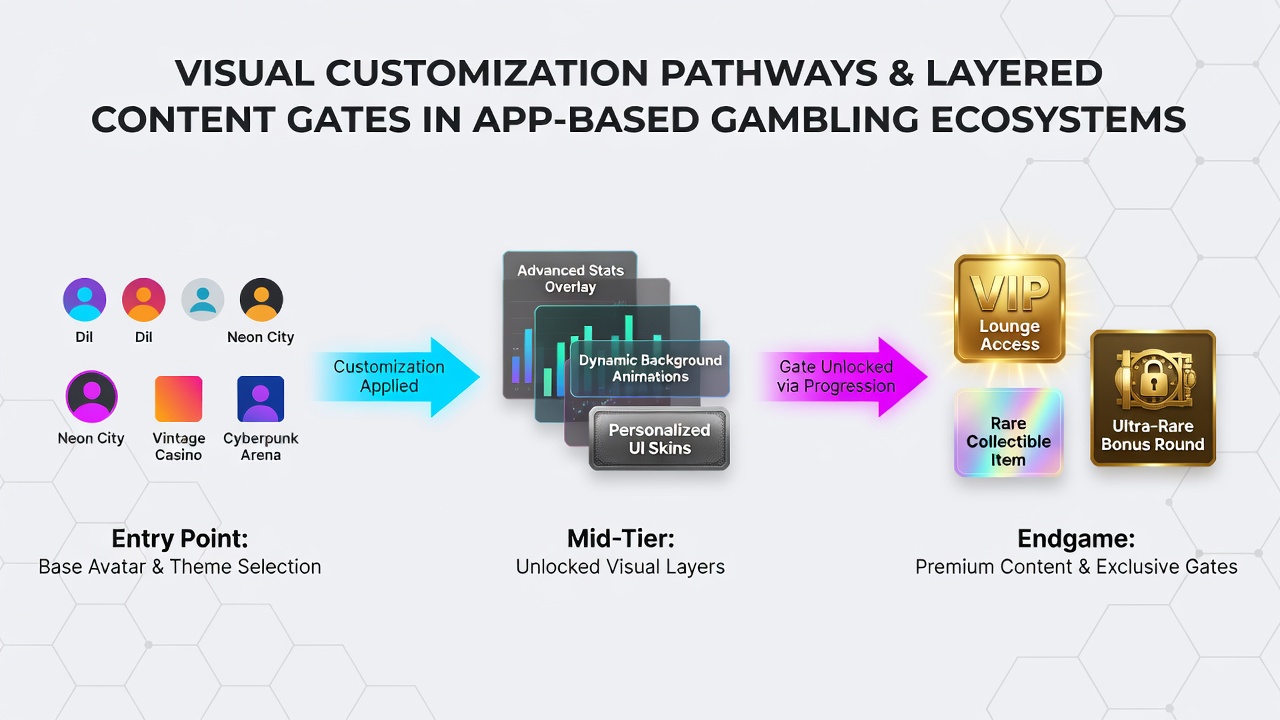
Pathway charts produced by developers typically display these connections as flow diagrams, with nodes representing specific visual changes and edges leading to content gates at varying depths. In July 2026 several major operators introduced updated charting tools within their developer portals to help analysts visualize how avatar modifications, background selections, and UI layout tweaks collectively influence access patterns. These charts demonstrate that certain visual categories unlock faster gates while others require combinations across multiple categories before deeper layers become available.
Integration with Loyalty Frameworks Across Regions
Operators in North America and the Asia-Pacific region link visual customization data to loyalty program databases, allowing cumulative visual achievements to contribute toward tier advancement independently of wagering volume in some cases. Reports compiled by the American Gaming Association detail how several U.S. state-licensed apps have adopted this dual-track approach, where visual milestones supplement traditional play metrics. Similar patterns appear in analyses from Australian regulatory summaries, which track how customization completion rates correlate with feature unlock statistics across different market segments.
Branching pathways also intersect with time-limited events, and data collected during promotional windows shows spikes in customization activity when new visual assets are introduced. Those who have reviewed cross-platform comparisons find that apps using modular customization engines can deploy region-specific visual themes without altering the underlying gate logic, maintaining consistent progression structures while adapting surface elements to local preferences.
Observational Patterns in User Progression Data
Analytics dashboards maintained by operators display heat maps of pathway usage, highlighting which visual sequences produce the quickest gate openings and which require repeated attempts across sessions. Evidence from aggregated mobile telemetry indicates that players who explore multiple customization categories simultaneously reach deeper content layers at higher rates than those following single-category routes. In July 2026 platform updates incorporated refined tracking for these multi-path explorations, enabling more granular reporting on how visual choices influence overall engagement depth.
External research institutions have begun examining these systems through anonymized datasets, and findings presented at recent conferences confirm that visual customization pathways function as low-friction onboarding mechanisms that gradually introduce users to complex content structures. The documented patterns reveal consistent sequencing across different operators, suggesting industry-wide adoption of similar architectural principles even as visual assets vary.
Conclusion
Visual customization pathways continue to serve as structured mechanisms for unlocking successive content gates within app-based gambling ecosystems, with technical mappings and regional loyalty integrations shaping how progression occurs. Data collected through July 2026 updates demonstrate ongoing refinements in how operators chart these connections, and the resulting frameworks maintain consistent logic across varied visual implementations. Further examination of pathway analytics provides continued insight into the operational design of layered access systems.